



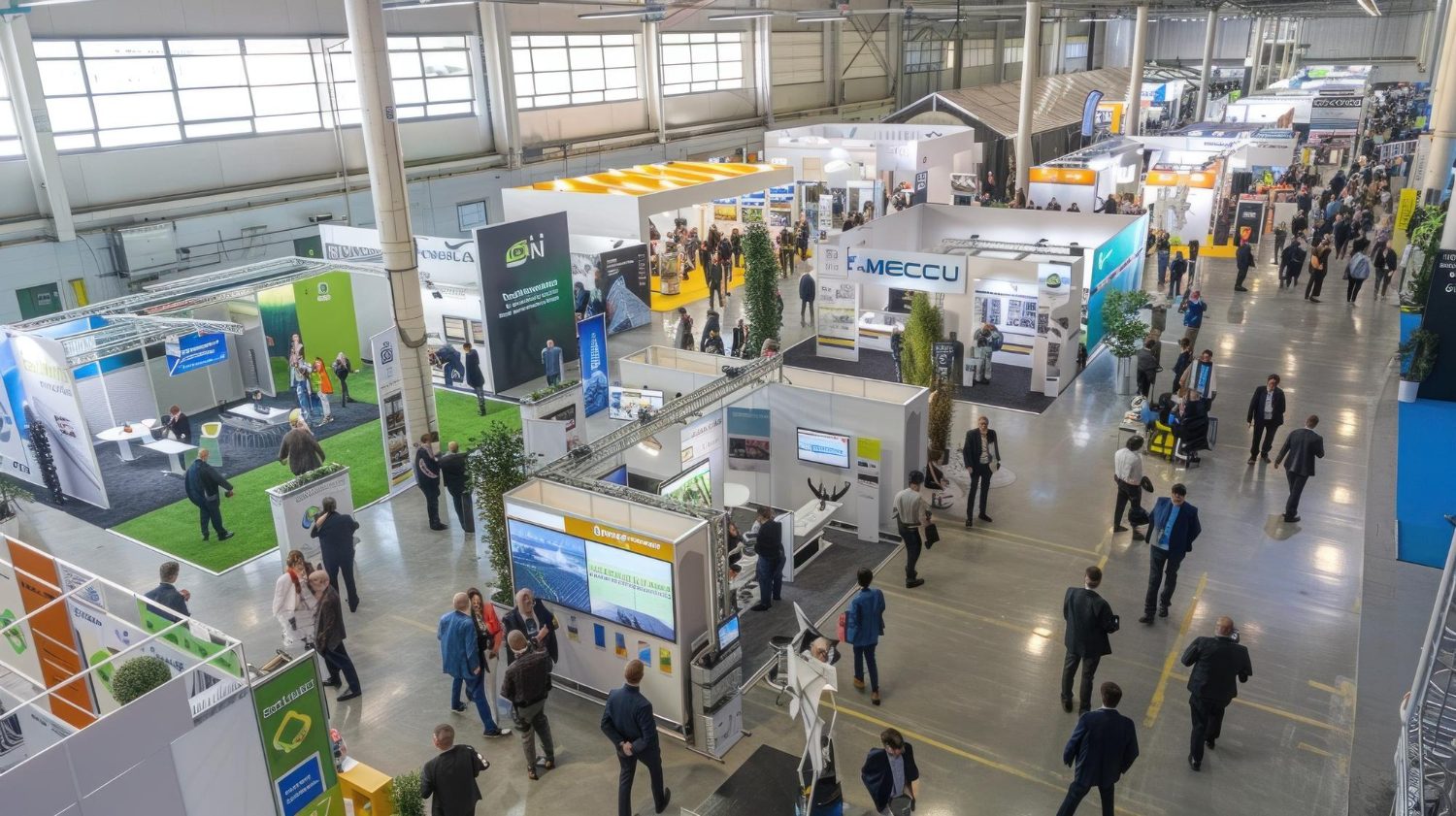
Trade show graphics work the hardest when they can travel with you from show to show, without feeling stale or off-message. If you exhibit more than once a year, you do not need a brand-new backdrop every time. You need a smart system that bends and flexes around your schedule, your booth sizes, and your audience.
Many exhibitors head to a spring regional show, a big summer conference, then a busy run of fall expos. By the time fall hits, they are tired of rush orders and last-minute reprints. Flexible trade show graphics solve that problem. In this article, we will walk through how to plan, design, and protect graphics that mix and match across events, while still looking fresh and on-brand.
Make Your Trade Show Graphics Work Harder All Year
Think about an exhibitor that goes to several shows every year. The booth size changes, the audience shifts a bit, and the theme of each event feels different. If every show means brand-new graphics, the budget disappears fast and the brand look gets messy.
Flexible trade show graphics are different. They are:
- Designed as pieces of a larger system
- Able to fit different booth sizes and layouts
- Easy to update without starting from scratch
- Focused and branded, not generic or bland
As fall trade show season kicks in, this is the perfect time to rethink your approach. You still have upcoming Q4 events, and the next year’s show calendar is not far away. Planning now means your graphics can work harder for a full year, not just for one big show.
Start with a Multi-Event Strategy, Not a Single Show
Before you design anything, look at your whole show year, not just the next date on the calendar. Map out your events so you can see patterns.
It helps to list:
- Large national events
- Smaller regional shows
- Typical booth sizes you use, like 10×10, 10×20, or island spaces
- Indoor versus outdoor booths
- Different industries or buyer types you want to reach
Then decide what must never change. For most brands, this includes your logo, core colors, tagline, and main product or service pillars. These are your anchors. Every piece of trade show graphics should follow these standards.
Next, decide what can change. Things like:
- Secondary messages and headlines
- Special offers and show promotions
- Seasonal visuals, like fall backgrounds or spring themes
- Photos aimed at certain industries or roles
When you look at it this way, you can treat your graphics as an ecosystem. Think of a family of panels, banner stands, and accessories that work together. You can rearrange them, scale them up or down, and still keep a strong, unified look.
Design Fundamentals That Make Graphics Truly Flexible
Once your strategy is clear, the design choices become easier. Flexible graphics start with layout. Modular layouts use clear grids and shared background elements. That way, you can swap out one panel and the whole wall still feels like one design.
Smart sizing and orientation matter too. Plan standard widths for panels and banner stands so they can line up in both 10×10 and 10×20 spaces. Make sure key visuals and headlines look good on a single panel and also when they sit side by side.
Readability is a big one. Your graphics should work from across the aisle and up close in a small booth. That means:
- Big, simple headlines
- Short phrases instead of long paragraphs
- Clean, open space around your main message
- Strong contrast between text and background
To keep everything consistent, set brand guardrails. Decide on color formulas, how much space your logo needs around it, what fonts you use, and what photo style fits your brand. When it is time for a refresh, these rules keep each new piece in line with the rest.
Mix-and-Match Components for Different Booth Sizes
Good flexible systems have a few key building blocks. First, there are anchor pieces. These might be a central modular wall, a tension fabric frame, or a set of hanging signs. They show up at every event and become your visual signature.
Then you have swappable message panels. These smaller pieces can highlight:
- Specific solutions for a niche show
- Seasonal promotions, like end-of-year offers
- New products you want to push at a certain event
Portable add-ons bring it all together. Banner stands, tabletop displays, and kiosks can live on their own at small events or join the bigger booth at large shows. For example, the same set of parts can create a tight, focused setup for a fall conference, a wider layout for a mid-size regional event, and a strong presence in a larger expo space.
Here in the Northeast, where we are based, weather and travel can change quickly in fall. Portable pieces that pack easily, set up fast, and connect well with your main booth give you extra flexibility when plans shift.
Seasonal and Show-Specific Messaging Without Reprinting Everything
You do not need to reprint your entire backdrop to keep your message timely. Instead, plan for seasonal overlays. These might be interchangeable headers, magnetic strips, or fabric sleeves that attach to existing walls. They can promote fall specials, end-of-year offers, or launch dates for new products.
Digital elements also help. Content on monitors or tablets can be updated from show to show. You can rotate in new demo videos, event-only pricing, or links to book meetings, while the printed graphics stay steady.
One helpful method is to build three content tiers:
- Evergreen brand story that rarely changes
- Mid-term campaigns that last several months
- Short-term hooks that are specific to one event
When these tiers sync with your email, social posts, and web content, attendees feel a smooth story from the inbox to the show floor.
Protect Your Investment with Durable, Reusable Materials
Flexible graphics only save time and stress if they survive the year. Materials matter. Look for lightweight but sturdy frames, wrinkle-resistant fabrics, and prints with protective finishes. These handle repeated setups, takedowns, and shipping without fading fast.
How you pack and store everything is just as important. Use labeled cases and protect panels from rubbing against each other. Store your booth in a dry, climate-controlled place so graphics do not warp, crack, or peel between events.
Good planning also means easy refresh cycles. If your system is designed well, you can replace only certain panels when your offer or branding shifts, instead of scrapping a full wall. This reduces last-minute orders and the stress of rush shipping as fall and spring shows stack up.
Finally, look at your show calendar with fresh eyes. List the next several events, note each booth size and main audience, then mark which pieces of your current setup can travel across all of them. From there, you can see where modular updates will give you the most flexibility and the strongest impact. A thoughtful graphics plan now will keep your trade show presence sharp and consistent at every event on your schedule.
Get Started With Your Project Today
Elevate your next exhibit with custom trade show graphics designed to match your brand and booth objectives. At First Trade Show, we work with you to choose the right materials, sizes, and layouts so your message is clear from every angle. If you are ready to discuss options, timelines, or pricing, simply contact us, and we will help you map out a display plan that fits your goals.