



Make Your Brand Unmissable Above the Crowd
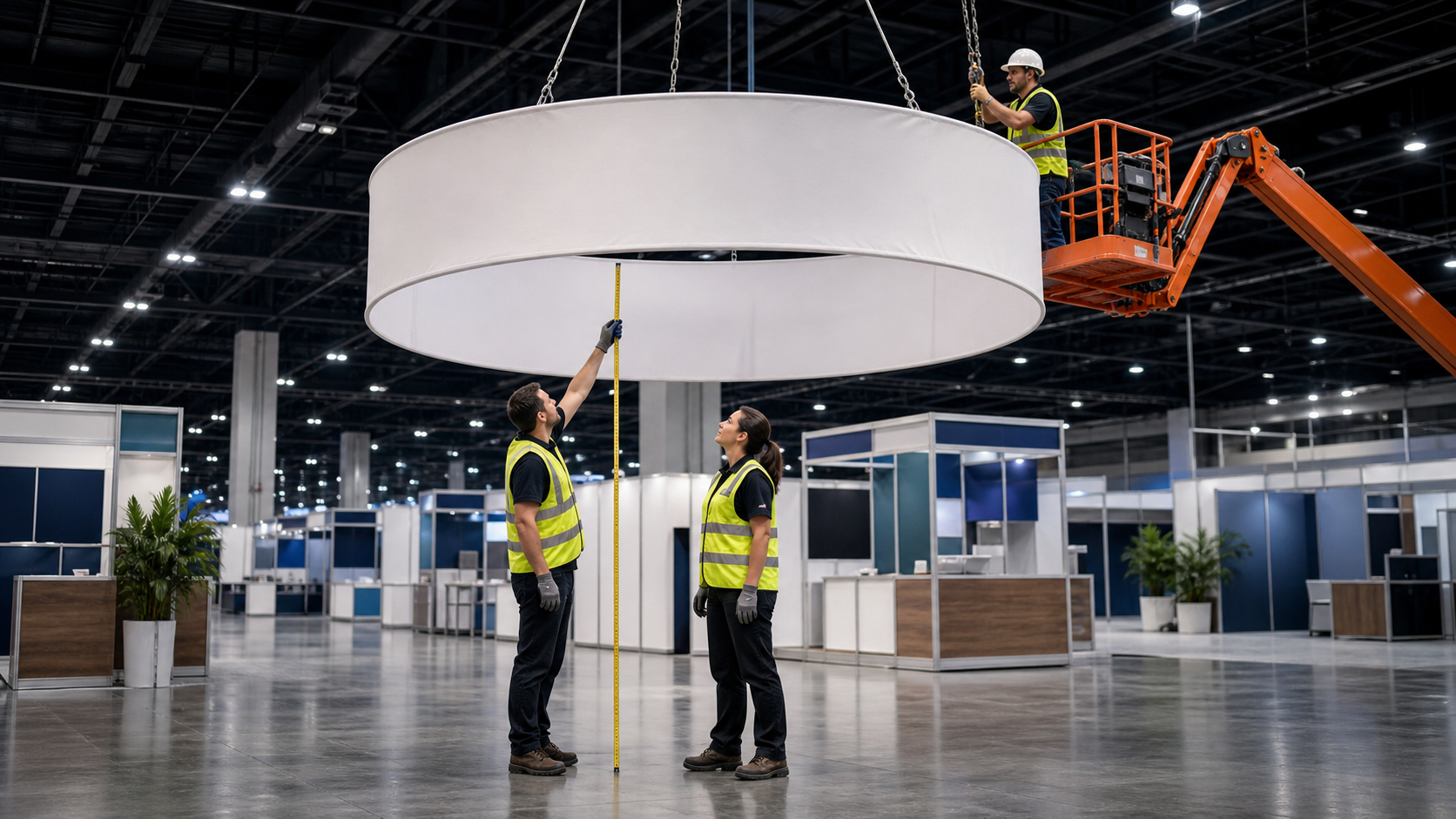
A trade show hanging sign is that big graphic that hangs from the ceiling above your booth. It is simple, but powerful. When people walk on a packed show floor, their eyes naturally go up. If your sign is strong and clear, they can spot you from far away and head right toward you.
A smart hanging sign helps you pull in more of the right visitors, not just random foot traffic. It points buyers to your space, even when aisles are crowded and the noise level is high, which is common at large fall and year-end shows. The problem is, many exhibitors lose this advantage by making small but costly mistakes when they order and plan their signs.
We work with trade show displays every day, and we see the same issues repeat over and over. Below, we will walk through common pitfalls with trade show hanging signs and how to avoid them so your next show is smoother, less stressful, and more successful.
Ignoring Show Rules and Rigging Requirements
One of the easiest ways to waste money on a hanging sign is to ignore the show rules. Every event has an exhibitor manual. Many people skim it, then guess on size or materials. Later, they find out the ceiling is lower than they thought or that certain hardware is not allowed.
Before you approve any design, you need to understand rigging requirements. This includes who is allowed to hang your sign, how much weight your structure can have, and what kind of cables or points the venue accepts. Some shows require you to use approved labor and have strict forms and deadlines.
If you skip this step, you can end up with big problems, such as:
- Being told your sign is too large or too heavy
- Paying redesign or reprint fees at the last minute
- Getting hit with rush labor or shipping charges
- Having your sign refused so it never goes up at all
A simple pre-order checklist helps a lot. Before you lock in your hanging sign, confirm:
- Maximum size and height for your booth type
- Weight limits and load per hanging point
- Material and fire rating rules for fabrics and graphics
- Any electrical or lighting limits tied to the sign
Doing this early gives your display partner room to design something that will be allowed and safe.
Choosing the Wrong Size, Shape, or Placement
Another common mistake is picking size and shape based only on budget or a quick guess. A hanging sign that is too small gets lost. One that is too large can crowd the space or break show rules.
Your hanging sign should be planned around:
- Booth size and layout
- Ceiling height and any beams or vents
- How far away people will be when they first see it
Different shapes work better for different spaces. For example, round or square signs often work well over island exhibits, because you can be seen from all four sides. Tapered shapes can add drama when visitors walk toward a main aisle. Long straight rings can help above inline or corner booths by stretching along the aisle.
Placement matters just as much as size. You want your sign centered over your footprint, or aligned with your main demo area, not drifting over someone else’s space. Think about:
- Traffic flow and where most people will enter the aisle
- Tall neighboring structures that might block sightlines
- How your overhead sign lines up with your back wall graphics
A display specialist can help map the exhibit hall environment and suggest the right dimensions and placement so your sign works with your space, not against it.
Overcomplicating Design and Weakening Your Message
A hanging sign is not a brochure. People will see it from 30 feet, 60 feet, or more. Tiny text and busy images just turn into a blur. Many exhibitors try to cram in product lists, long taglines, or detailed photos. From a distance, all that detail disappears.
For long-range graphics, simple wins. Focus on:
- Your brand name and logo, large and clear
- One short message or tagline at most
- Strong, high contrast colors that stand out against the hall
Fall and year-end shows are packed, and the visual noise is real. Everyone has bold colors, lights, and motion. The more crowded the floor, the more your hanging sign needs to calm down. Clean design, lots of open space, and clear type help your brand feel confident and easy to spot.
Some basic design tips:
- Use vector logos so edges stay sharp when printed large
- Keep fonts thick and simple, no skinny scripts from far away
- Repeat your core brand colors so your booth looks unified
- Make sure each side of the sign can stand alone and still make sense
This way your hanging sign acts like a beacon and supports every other graphic in your space.
Overlooking Structural Quality and Easy Installation
A hanging sign is more than fabric and ink. The frame, connectors, and hardware all need to work together. Choosing the cheapest hardware or ignoring durability can cost you later when something bends, breaks, or takes forever to assemble.
Look for quality factors such as:
- Lightweight but strong aluminum frames
- Tension fabric that resists wrinkles and sags
- Clean seams and accurate graphic alignment
- Safe and reliable hanging points that match rigging standards
How your sign packs and unpacks matters too. When install time is tight, clear labels and smart cases can save hours. It helps to have:
- Separate, clearly marked bags for frame sections
- Step-by-step printed instructions with diagrams
- Hardware sets grouped by use so nothing gets mixed up
When you work with a trade show display provider that cares about engineering and support, you lower the risk of surprises on site. Pre-show test fits and clear instructions give your team or labor crew confidence before the sign ever leaves the ground.
Skipping Lead Time, Proofing, and Pre-Show Testing
Rushed orders might seem fine at first, but they leave no room for error. Production, shipping, and rigging schedules all tighten up as big shows get closer. When you leave your hanging sign to the last minute, you face rush charges, fewer freight options, and little or no time to fix issues.
A better approach is to work backward from your show date. Build a simple timeline that covers:
- Design and layout time
- Internal approvals on your side
- Production, finishing, and quality checks
- Shipping and advance warehouse delivery
Careful proofing is just as important as timing. When you review proofs, watch for:
- Color accuracy and brand consistency with the rest of your booth
- Logo placement and size on every side
- Spelling, spacing, and legibility
- Correct orientation so nothing prints upside down or reversed
If you can, do a full test hang at your office or warehouse. Even in a smaller space, this helps you confirm fit, tension, and that all hardware is packed. At minimum, assemble the frame and slide on the fabric skin so you know everything fits as planned.
When you treat your trade show hanging sign as a real structure with a real schedule, not just a late graphic, you avoid stress and protect your investment for future shows.
Elevate Your Booth With High-Impact Overhead Visibility
Make your brand the first thing attendees see with a custom trade show hanging sign tailored to your exhibit space. At First Trade Show, we help you choose the right shape, size, and graphics so your message is clear from every angle. Tell us about your next event and we will guide you through design, production, and logistics. Ready to move forward with your display upgrade? Contact us today to get started.