



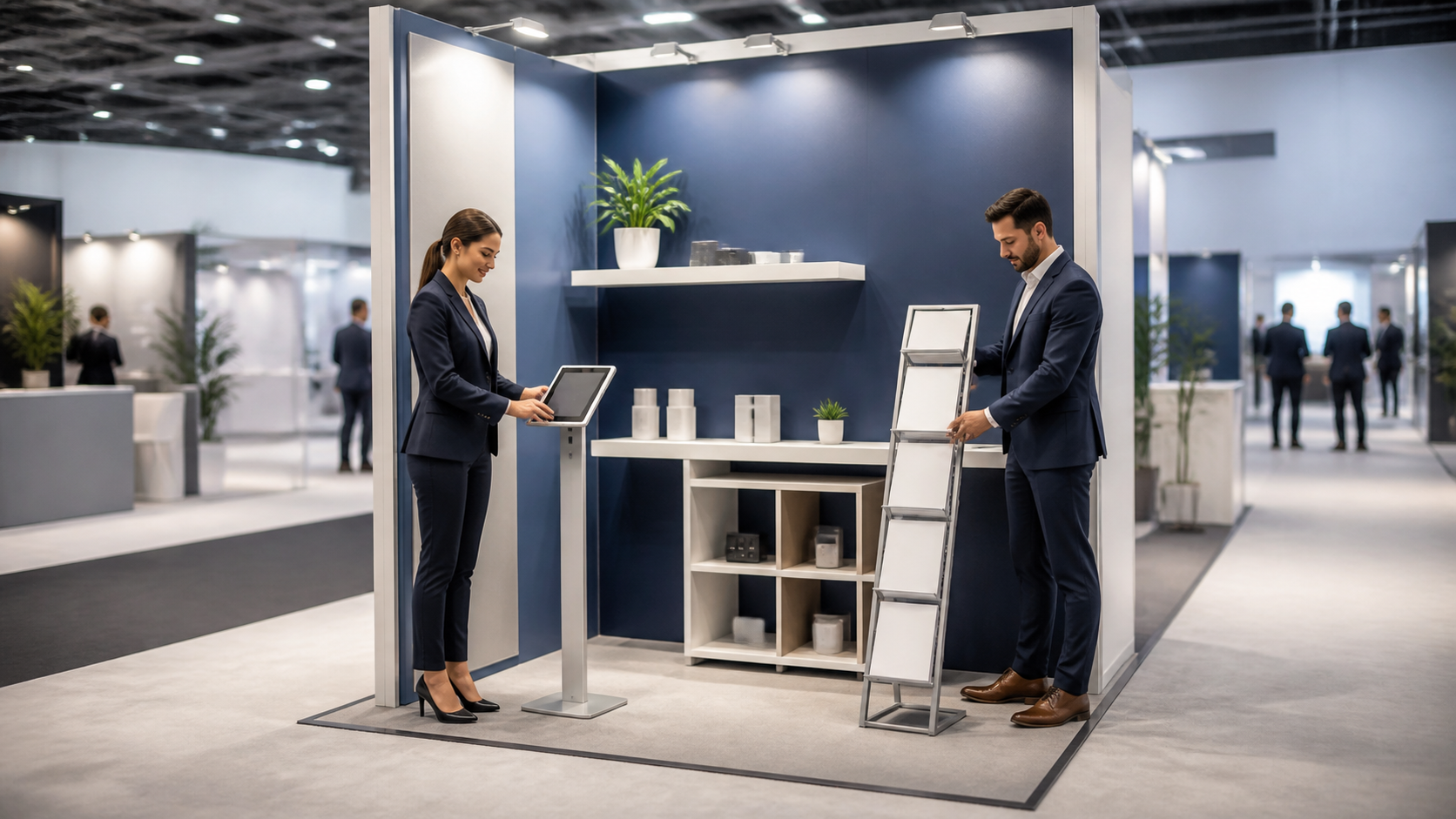
Make a Small Booth Feel Big and Inviting
A small trade show booth does not have to feel small. With the right trade show accessories and layout, a compact space can look open, clear, and full of energy.
Smaller booth spaces are more common now. Budgets are tighter, fall shows are packed, and many teams are trying to squeeze one more event into the year. The challenge is real: how do you stand out and tell a full brand story when you only have a tiny square of carpet?
The answer is not “more stuff.” It is choosing the right accessories, using smart graphics, and placing each piece with a clear purpose. When we plan a booth this way, it feels intentional, not crowded. In this article, we will walk through how to prioritize, layer, and position trade show accessories so your small footprint feels welcoming, not cramped.
Start with a Clear Goal and Visitor Journey
Before picking a single accessory, we like to ask one simple question: what does success look like for this show?
Your main goal will shape almost every choice:
- Lead generation: you might focus on quick conversations, tablets for capture, and simple handouts
- Product demos: you might need a compact monitor, a demo counter, and space for people to watch
- Quick scans: you might want bold graphics that tell your story in seconds
- Scheduled meetings: you may need a small table and chairs, plus a calm spot for talks
Once you know the goal, sketch a “micro-journey.” Think about what a visitor should see, do, and remember in 30 to 90 seconds. For example:
- First glance: clear brand ID and one strong headline at eye level
- First step in: friendly staff in a visible spot, not hiding behind a wall
- During the chat: easy access to a demo, a sample, or a simple takeaway
- Before they leave: a quick way to capture info or send them to a next step
From there, divide your ideas into “must-haves” and “nice-to-haves.” Must-haves are basics like:
- Brand name and logo
- One key message
- One clear call to action
Only after that list is set do we talk about furniture, tech, and décor. This is especially helpful in the last quarter of the year, when fall trade shows often bring serious buyers planning next year’s budget. Your layout and accessories should help those people make fast, confident decisions: seeing your product clearly, understanding your value, and knowing what to do next.
Choose Compact Trade Show Accessories with Big Impact
In a small booth, floor space is gold. The trick is to go up, not out.
We often start with vertical pieces like:
- Banner stands with strong graphics
- Tension fabric backwalls that pack small but look polished
- Hanging signs, where allowed, so your name shows above the crowd
Then we look for accessories that do at least two jobs:
- Counters that double as storage and a welcome point
- Tablet stands that grab leads and also share a quick slide show
- Literature racks that hold materials and gently divide space
Tech can help, but only if it stays in scale with your booth. Small-form monitors, tablets, and clean LED lighting can make demos feel sharp without taking over the space. A single well-placed screen often works better than a wall of TVs.
Since we work with custom graphics and modular elements, we like two-job accessories that can be scaled up or down. The same backwall you use in a 10×10 booth can often expand or reconfigure for a larger space later. That keeps your trade show accessories working harder from show to show.
Design a Clean Layout That Manages Traffic Flow
Even the best accessories fail if the layout is off. One of the first choices is whether the front of your booth is open or more defined.
An open layout, with no big counter across the front, is great when:
- You want quick walk-ups
- The aisle is busy and people are moving fast
- You are doing short, simple chats and scans
A slightly closed layout, using a counter or kiosk, can work when:
- You need a clear line for demos
- You are holding short scheduled talks
- You want a bit more control over who steps in and where they go
Plan where you place product displays, demo stations, and any seating so visitors never feel trapped. You do not want someone stuck behind a table while the aisle blocks their way out. This is extra important at crowded fall shows, when people are hauling bags and wearing heavier layers.
Sightlines matter too:
- Keep tall items to the back or sides
- Use lower items near the front
- Do not stack too many large accessories in one line, or you build a “wall” that hides your team
Always think about comfort and safety. Leave enough room for easy entry, including ADA-friendly paths. Tuck cables away so no one trips. In cooler months, people feel warmer and bulkier, so a little extra space in each path goes a long way.
Cut Clutter with Smart Storage and Graphic Discipline
Clutter is the fastest way to make a small booth feel tiny. That is why we love hidden storage.
Pedestals, counters, and some backwall systems can include built-in storage. These give you a place to tuck:
- Extra brochures and samples
- Branded bags and giveaways
- Staff coats, backpacks, and personal items
On the graphic side, keep things simple. One main headline, one strong visual, and one clear call to action are usually enough on a small wall. If you try to cram your entire brochure on a banner, people will not read any of it.
Fall trade shows can feel warm and crowded in the hall, even when it is cool outside. An uncluttered layout makes your booth feel cooler, lighter, and easier to walk through. Your staff can help keep it that way if you give them simple rules for where to stash:
- Bags
- Water bottles
- Phones and chargers
Those small touches keep your polished look from slipping halfway through the day.
Make Every Accessory Work Harder for Follow-up
A smart booth does not only work during the show; it also supports what happens after. Lead capture should be built into your layout.
Place tablets, badge scanners, or simple QR codes in natural conversation spots, like:
- On a front counter where people sign up for more info
- Near a demo station, inviting visitors to get a copy of what they saw
- On a small stand at the edge of the booth for quick scans by shy visitors
For take-home tools, think compact and useful. Small, well-designed cards, one-page sheets, or promo items that fit easily in a bag often get kept longer than big, bulky pieces. Make it clear how they connect back to you, such as a clear web address, a landing page name, or a short next step.
Finally, keep your brand look tight across all trade show accessories, from table throws to hanging signs. When the same colors, style, and key message show up again later at a meeting, local event, or in your office lobby, people connect the dots and remember your booth, even if it was small.
At First Trade Show, we see how a compact space can become a standout presence when every inch and every accessory has a job to do.
Elevate Your Next Trade Show With the Right Accessories
Make every inch of your booth work harder with thoughtfully chosen trade show accessories that support your brand and your goals. At First Trade Show, we help you choose pieces that improve function, polish your presentation, and encourage more meaningful conversations with attendees. If you are not sure what you need or want guidance on options that fit your budget, contact us so we can walk you through the best choices for your next event.