



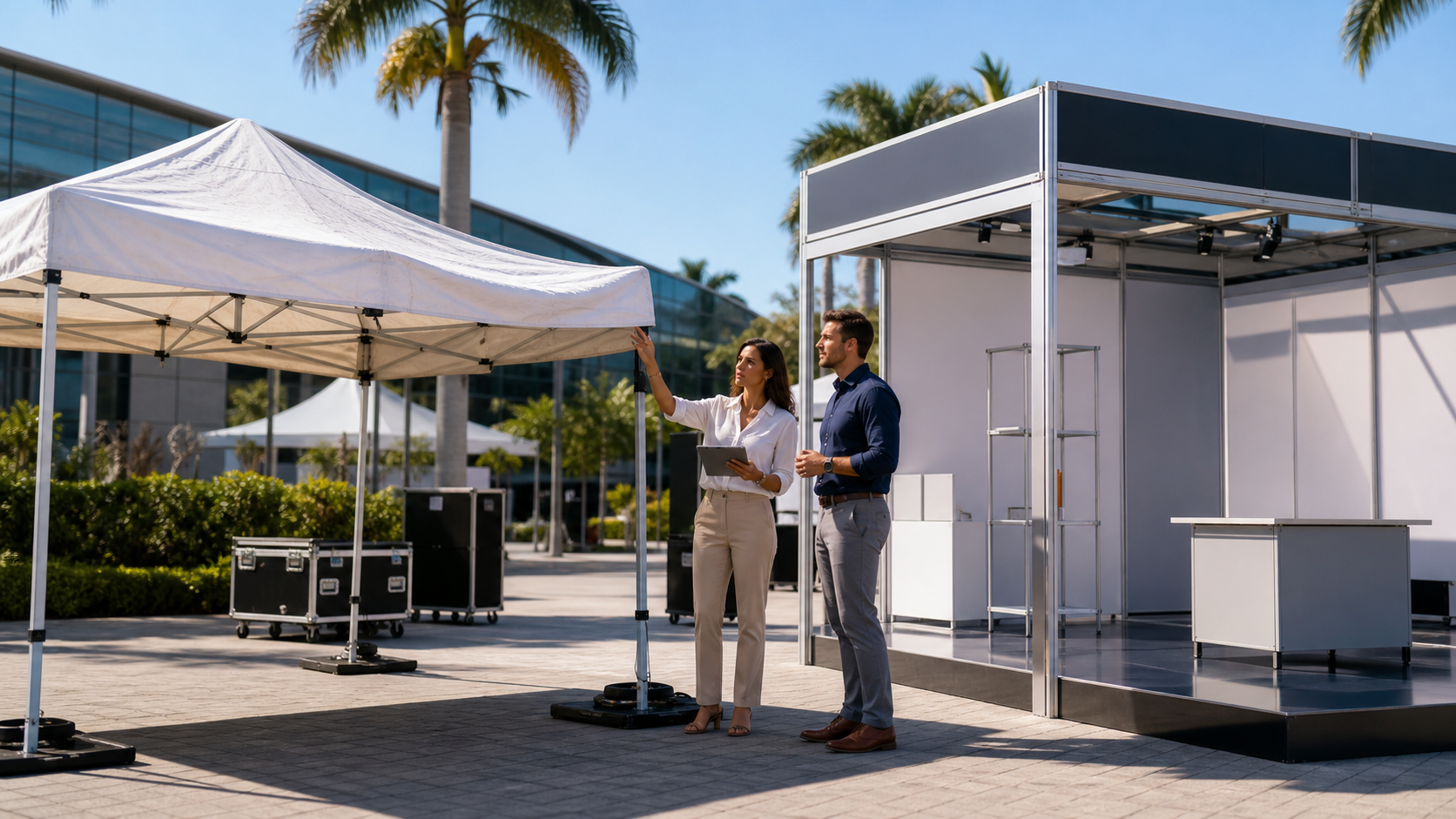
Rethinking Pop-up Tents for Outdoor Trade Shows
Outdoor trade shows in October sound simple. Bring a pop-up tent, set up a table, roll out a banner, and you are ready to go, right? Then the wind kicks up, the sky turns gray, the air gets chilly, and that easy setup suddenly feels very shaky. Staff are cold, graphics are flapping, and your booth looks more like a tailgate spot than a serious exhibit.
Fall weather can change by the hour. Warm sun at noon, cold wind by late afternoon, maybe a light drizzle rolling in. When your booth is outside, your shelter is not just a nice extra, it can decide how many people actually step into your space and stay there. Here, we want to question if a basic pop-up tent on its own is really enough for a professional brand presence, and share how outdoor booths can work harder than just covering your heads.
What Pop-up Tents Actually Do Well
We get the appeal of a simple pop-up tent. It feels safe and familiar, and for many teams it is the first thing that comes to mind for an outdoor event.
Here is what pop-up tents do well:
- Quick setup, most basic tents go up in minutes with two people
- Easy transport, they fold down, fit in a car, and do not need special tools
- Clear boundary, they create a simple “this is our space” footprint
- Basic cover, they give some shade and light rain protection
For low-pressure events, like casual community fairs or school fundraisers, a simple tent can be fine. When the stakes are low and you just need a place to stand, chat, and hand out flyers or samples, speed and simplicity can matter more than design.
And for teams that are new to outdoor trade shows, that familiar tent can feel less scary than more advanced exhibit hardware. It is a starting point, and there is nothing wrong with that. The problem is when a basic tent is asked to do more than it was really built to do.
Where Pop-up Tents Fall Short for Serious Exhibitors
Once you move into serious trade show territory, a plain pop-up tent can start to work against you.
First, brand impact. At many outdoor shows, you will see long rows of white or simple colored tents. From a distance, they blend together into one flat line. Even if you add a logo to the canopy, the print area is limited, and the low height makes it harder for people to spot you from across the grounds. You risk becoming part of the visual noise instead of a clear, bold stop.
Then there is the weather. October wind can be no joke. Loose fabric can flap, poles can shake, and rain can pool on the canopy. Some teams deal with:
- Bent or twisted frames after a gusty afternoon
- Sidewalls that flap open, letting rain and cold air rush in
- Stakes that are not strong enough for soft or uneven ground
When your booth feels flimsy, visitors feel it too. They may not say it out loud, but they will sense that your space is not as stable or planned as it could be.
Function is another pain point. A simple 10-by-10 tent easily gets cramped. Add a table, a couple of banner stands, products, and three staff, and you suddenly have:
- Awkward traffic flow, people bumping into each other at the entrance
- Limited room for demos or samples
- Few clean ways to mount lighting, shelves, or tech
You end up with “a tent and a table” instead of a true outdoor exhibit.
Smarter Outdoor Alternatives to a Basic Pop-up Tent
The good news is that you are not stuck choosing between “plain tent” and “giant permanent structure.” There is a middle ground that keeps things portable but looks and performs far better.
Tension fabric structures are one strong option. These use frames with custom printed fabric that stretches tight, so graphics look smooth and bold. The shapes can be more sculptural than a square tent, which helps you stand out. Because the fabric is under tension, it usually handles wind better than loose, flapping canopies.
You can also build hybrid setups that still use a tent, but not alone. For example:
- A higher-quality tent paired with a tall branded backwall
- Printed sidewalls that block wind and show big, clear messages
- Free-standing banner stands at the corners to pull people in
With the right pieces, the tent becomes one part of a larger, more thought-out space instead of the whole story.
Weather-ready hardware finishes the job. Outdoor-rated materials, reinforced frames, solid anchoring, and weighted bases help your booth stay sharp and steady when gusts and light rain hit. You reduce that “is this going to blow over?” feeling and gain more control over how your brand appears throughout the day.
Designing an Outdoor Booth That Works Harder Than a Tent
A strong outdoor booth starts with layout, not just hardware. Before choosing gear, it helps to map out how you want people to move through your space.
Think about:
- A clear, open entry that does not feel blocked by a big table
- A demo or sample area that is easy to notice from the aisle
- Hidden storage for boxes, bags, and staff items
- A small seating or chat zone for longer talks
When each part of the space has a job, the booth feels more like an exhibit and less like a camping setup.
Next, layer your branding. Do not rely on one spot for your logo. Use:
- Canopy or top graphics that can be seen from a distance
- A tall tower or fabric backwall that rises above tent height
- Flags or feather banners at the front corners for movement and color
This way your brand shows up at eye level, above the crowd, and even from side angles.
Comfort matters too, especially in fall. Shade for sunny hours, sidewalls or structures that block wind, and simple lighting as the sun dips can keep people in your booth longer. When visitors are not shivering or squinting, they are much more likely to stay, talk, and remember you.
How First Trade Show Helps Outdoor Exhibits Go Beyond the Pop-Up Tent
At First Trade Show, we spend a lot of time helping teams step beyond the basic pop-up tent mindset, while still keeping things portable and exhibitor friendly.
We start by talking through your goals, your outdoor space, and what kind of fall weather you are likely to see. Then we help decide where a pop-up tent still makes sense and where it needs support. Sometimes the answer is a stronger tent with better anchoring and smart add-ons. Other times the better move is a custom tension fabric system or an island-style outdoor layout with clear traffic paths.
Our team designs and supplies custom exhibits, graphics, and accessories that work together as a full outdoor environment. We focus on:
- Tension fabric systems that carry big, bold visuals
- Banner stands that frame entries and key messages
- Branded backwalls and structures that add height and shape
- Outdoor accessories that feel intentional, not improvised
Everything is planned to pack down, travel well, and set up without specialized crews, so your team can keep the ease of a tent while gaining the presence of a true trade show exhibit.
Get Started With Your Project Today
Elevate your next event with a customized pop-up tent designed to match your brand and space. At First Trade Show, we work with you to choose the right layout, graphics, and accessories so your booth is easy to set up and memorable for visitors. If you have questions about options, timelines, or pricing, simply contact us and we will help you plan every detail.