



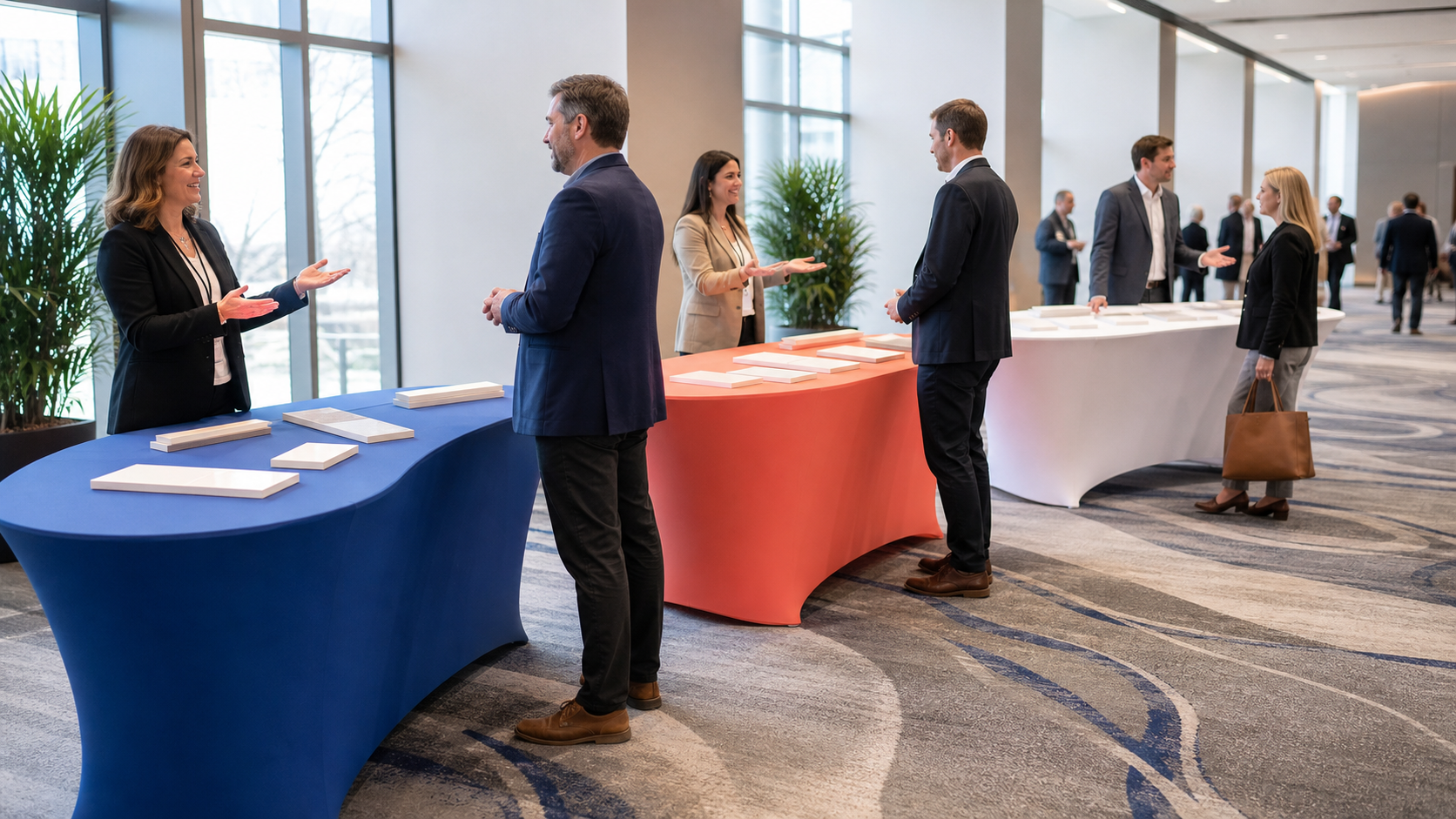
Trade show table throws do a lot more than cover a folding table. They help decide where people walk, where they pause, and whether they ever step into your booth at all. When the aisles get crowded in the fall, small choices at the front edge of your space can make the difference between steady leads and a long, slow day.
In this article, we will walk through how attendee flow really works on the show floor, and how a trade show table throw can guide that flow instead of blocking it. We will talk about placement, layout, design, and how to make your table part of a simple, natural path into your space, not a wall across it.
Turn Your Trade Show Table Into a Traffic Magnet
Picture a busy fall show floor in a big convention center. People are wearing coats, juggling tote bags, coffee, and flyers. The aisles feel tighter, and attendees have just a few seconds to notice what is in front of them before they drift past.
In all that noise and motion, the front line of your booth acts like a gatekeeper. For many exhibitors, that front line is a six-foot or eight-foot table with a trade show table throw on it. Where you put that table, how the fabric hangs, and what is printed on it all affect who stops, who keeps going, and who steps inside.
A trade show table throw is not just fabric. It is a visible edge, a color block in someone’s side vision, and a soft barrier or a welcome mat. Used well, it can slow people down just enough for your message to land. Used poorly, it can push them right past you.
Our team spends a lot of time thinking about both design and attendee behavior on the floor. As busy fourth-quarter events ramp up, we like to treat the table throw as a quiet traffic tool, not just a branded cover someone tosses on at the last minute.
How Attendee Flow Really Works on the Show Floor
Attendee flow is not random. People follow patterns without even thinking. On a typical floor, you see:
- Main aisles that carry heavy traffic
- Cross aisles that feel more relaxed
- Corner spots that get attention from two sides
Most people favor the right-hand side when they walk. They scan ahead, but they also catch things in their side vision. That gives you only a few seconds of “glance time” as someone passes your booth edge. In those 3 to 5 seconds, your table throw, banner, and front layout decide whether they pause or pass.
We also see lots of “micro-stops.” These are tiny pauses when someone slows for swag, a bold graphic, or a product sample. If your table is at the very front, that micro-stop will probably happen in the aisle. If your table is pulled back, that pause can happen inside your footprint, where a real conversation is easier.
Fall shows add even more pressure. Coats, thicker layers, and full bags make aisles feel packed. People avoid tight spots and anything that looks awkward to enter. This is why it helps to design your booth from the aisle inward. Ask: what happens in the first three feet from the aisle? Your trade show table throw should support the natural path, not chop it off.
Using a Trade Show Table Throw to Direct Traffic
Think of your trade show table throw as a visual anchor. It can act like a fence or like a guide rail, depending on how you use it.
Full throws drape over all four sides of the table. They are great when you need hidden storage under the table, and they create a solid “front desk” feel. That can be helpful for check-in, quick badge scans, or when you want a clear line between your space and the aisle.
Fitted and stretch throws hug the table shape. They feel cleaner and more modern, and they read less like a wall. They can make your front edge feel open, especially when paired with low items on top instead of a big, tall barrier.
You can also use design choices to steer people:
- Color blocking that pulls eyes toward an open side
- Edge-to-edge graphics that lead from one corner toward a demo area
- Logos or icons placed closest to your main entry point
Good table throw design works with your entry lanes, not against them. Our design team likes to map booth zones first, then build the throw graphics so they visually point to your key spots: demos, sign-up areas, or sample displays.
Strategic Placement and Layout That Keep People Moving
Where you park the table matters as much as how it looks.
Front-of-booth placement creates a strong barrier line. It is useful when you want to:
- Control crowds
- Keep people from wandering behind your staff
- Keep conversations shorter and more structured
Side-of-booth or pulled-back placement opens up the front and invites people in. This works well when you want longer talks, demos, or hands-on product time.
Here are some layout ideas by booth size:
- 10×10: Place the table off-center and angle it slightly so it creates a visible lane into the space. The throw can carry graphics that point toward a back-wall graphic or demo stand.
- 10×20: Use two coordinated tables, or a table plus a counter, at each side. This frames a central engagement zone instead of blocking it. Attendees see a clear “walk in here” gap in the middle.
- Island or peninsula: Use a central or corner table as a hub for sign-ups or short demos. Keep all sides open so people can approach from any aisle, and let your throw graphics repeat key messages on more than one face.
At crowded fall shows, people choose the path that feels least awkward. If your table and throw create a simple, obvious entry, more attendees will take that path without thinking.
Designing Table Throws That Guide Behavior, Not Just Brand
Your trade show table throw should do more than show your logo. It should quietly coach people on what to do next.
Start with a clear message order:
- Big, readable brand mark near the front edge
- One short, benefit-focused line that someone can read while walking
- Optional smaller details closer to where people stop and stand
Imagery can also guide behavior. Product shots facing the aisle spark curiosity. Arrows, angled lines, or even the direction a person in a photo is “looking” can point toward samples, screens, or sign-up tablets.
A few practical details help with flow too:
- Avoid fabric that drags on the floor at the front where shoes and bags catch
- Choose wrinkle-resistant materials that stay neat through long event days
- Pick finishes that photograph well, since many visitors snap quick booth photos
When we design custom table throws, we like to start with goals like “we want more people to step inside” or “we need faster first conversations.” Then we build the layout, words, and imagery so the table throw supports those goals, not just the brand colors.
Pairing Table Throws with Other Display Elements
A trade show table throw works best as part of a simple, coordinated system. Your table is one piece in a path that might include a back wall, banner stands, hanging signs, and smaller displays.
Some smart pairings:
- A branded table throw near the side, plus a slim banner stand just inside the booth that pulls people deeper in
- A front table throw with a very clear message, combined with a tall, simple hanging sign that grabs attention from far away
- Small risers, product pods, or literature holders on the table that create mini “stations” so people do not crowd one single spot
At First Trade Show, we design portable displays and accessories to work together cleanly. When your table throw, graphics, and hardware all support the same flow, your booth feels easier to enter and easier to understand, even when you are short-staffed during a busy fall event schedule.
Every choice you make about your trade show table throw, from style and placement to graphics and accessories, shapes how people move. When the flow feels natural, more of the right attendees step in, stay a bit longer, and start real conversations.
Elevate Your Trade Show Display With Professional Finishing Touches
A high quality Trade show table throw can instantly pull your entire booth together and help your brand look polished and consistent. At First Trade Show, we help you choose the right materials, colors, and imprint options so your table setup supports your overall event goals. If you are unsure what you need or want guidance on customization, simply contact us and we will walk you through every step.