



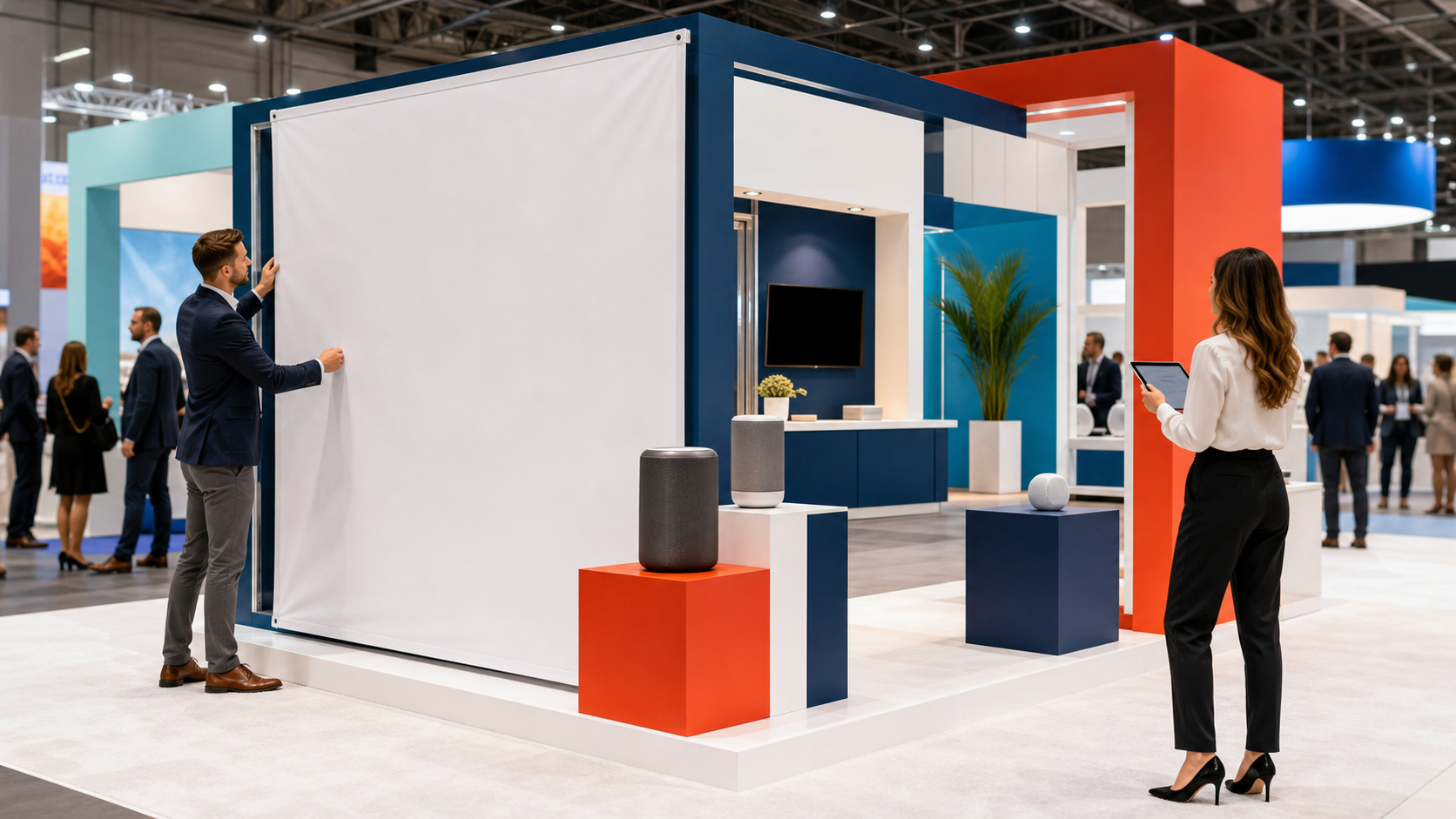
Trade show graphics can make or break an island booth. When aisles are packed and attention is short, your visuals have to speak fast, clearly, and from every angle. If your island display feels busy, dated, or just a little flat, this is the perfect time to step back and question your graphics strategy before your next big show.
In the fall, when show schedules get heavy and buyers rush from meeting to meeting, your booth has only a few seconds to earn a second look. In this article, we will walk through how to rethink your trade show graphics so your island exhibit tells a clear story, works with traffic flow, and supports your sales goals instead of fighting them.
Rethinking Your Island Graphics Before Your Next Show
Fall shows can feel like a packed stadium. Aisles are crowded, voices blend together, and every booth is trying to pull people in with light, motion, and bold color. Island displays have huge potential in that world, but many exhibitors let that prime space get buried in cluttered graphics and mixed messages.
Island exhibits are different from inline booths because they offer:
- 360-degree visibility from multiple aisles
- Taller structures that stand over nearby booths
- Longer sightlines, often from far across the hall
That reach is powerful, but it also raises the stakes. A random mix of images and copy on every surface can confuse buyers instead of guiding them. Graphics are not just decoration. They are how your island claims its space.
Right before the heavy fall run, and as you plan for the next show cycle, is a great moment to pause and ask: Does our island still match our current brand, products, and goals? If the answer is “not really,” it is time to rethink the visual story.
Clarifying Your Island Display Purpose and Story
Before anyone touches a design file, we like to start with one simple question: What is the main job of this island booth? Different goals require different trade show graphics.
Your primary objective might be:
- Lead generation
- A big product launch
- High-level brand awareness
- Live demos or training
- Partner or customer meetings
When that purpose is fuzzy, the message usually turns fuzzy too. You end up with a little bit of everything and not enough of anything. Instead, build a simple story arc that flows around the island: who you are, what problem you solve, why it matters right now, and what visitors should do next.
Each side of the island can support a piece of that story. One face can focus on your main promise, another on the problem, another on the solution or demo, and an interior wall on proof and details. There is no rule that says every side has to repeat the same graphic.
Work closely with your sales and marketing teams so the booth connects to current campaigns, seasonal offers, or new product pushes. When your trade show graphics echo the emails, social posts, and invites people saw before the show, your space feels familiar and intentional.
Mastering Sightlines, Angles, and Viewer Distance
Island displays are seen from far away, up close, and from odd angles. That means your visuals need a clear hierarchy, from top to bottom.
Think in three levels:
- Highest: hanging signs for simple brand recognition and category
- Mid-level: main walls for short, bold messages and strong imagery
- Close range: interior panels and counters for details and proof
Common mistakes we see a lot:
- Dense text placed high where nobody can read it
- Key messages hidden behind tall structures or monitors
- Every surface covered with copy, leaving no place to rest the eye
The best island graphics treat the tallest elements like a billboard. At a distance, people should recognize who you are and what space you play in within three seconds. Save longer copy for where people naturally stop.
Traffic flow matters too. Think about:
- Where attendees first see your booth from the aisle
- Where they step into the space
- How they move toward demos, seating, or product areas
Match graphics to that path: welcoming visuals and a clear promise at the entry, helpful education at demo zones, and proof points or calls to action in discussion or meeting areas.
Simplifying Messages While Maximizing Impact
With busy fall shows and short dwell time, clarity beats clever every single time. The most effective trade show graphics usually stick to one main idea per panel or surface.
A simple messaging plan might look like this:
- Top level: your core brand promise on towers or hanging signs
- Mid-level: two or three key benefits on main outer walls
- Interior: features, stats, diagrams, or short quotes for engaged visitors
Use short, benefit-driven headlines and minimal support copy. Pair them with visuals that instantly show your category, like product images, bold icons, or clean diagrams. When people walk by, they should know in a heartbeat why your booth might be worth a closer look.
As seasons change and buyer priorities shift, it is easy for trade show graphics to lag behind. Old taglines, generic phrases, or broad claims can quietly kill interest. Before your next show, trim anything outdated and replace it with fresh language that speaks to what matters to your buyers right now.
Choosing the Right Fabric and Modular Graphic Solutions
For island exhibits, fabric-based structures are hard to beat. They are lightweight, smooth, and great for large-format graphics. Fabric frames can create tall, seamless walls that stand out above the show floor without heavy visual seams or busy hardware.
Common modular fabric options include:
- Tension fabric frames in different heights and widths
- Hanging signs in rings, squares, or custom shapes
- Towers and arches that add height and structure
- Curved walls that break up straight lines and frame key areas
When planned well, these pieces can be reconfigured across different shows and booth sizes, which keeps your graphics investment working longer. You can refresh select panels when your message changes, instead of rebuilding the whole booth.
It also helps to think about real-life logistics, especially when the weather can affect travel and shipping in and out of the Northeast. Ask practical questions: How long will install and dismantle take? How easy is it to pack and protect the graphics? Can we swap out fabric skins between fall and spring?
A consultative exhibit partner can help match the right materials and structures to your long-term plans, so your island looks sharp show after show instead of feeling like a one-time build.
Turning Your Graphics Strategy Into Measurable Results
A strong graphics strategy should show up in real results, not just nicer photos. Before your next major show, take time to audit your current island graphics.
Look at each surface and ask:
- Is this clearly visible from the aisles that matter most?
- Is the message simple and benefit focused?
- Does it support our main show goal?
- Is any part outdated, confusing, or off brand?
Prioritize fixes that protect sightlines, sharpen key headlines, and align with what your sales team is trying to achieve on the floor. Bring marketing, sales, and your exhibit partner into the same conversation so structure, graphics, and outreach all pull in one direction.
As you move through your Q4 and early-year events, treat your island as a living test. Pay attention to where people enter, where they pause, and which graphics they talk about or point to. Track leads, scan activity, and feedback. Then keep adjusting your trade show graphics based on what you learn, instead of guesswork, so every island show becomes a little clearer, stronger, and more effective than the last.
Get Started With Your Project Today
Bring your booth vision to life with custom trade show graphics designed to fit your goals, space, and budget. At First Trade Show, we work with you to create displays that attract attention and clearly communicate your message. Share your timeline and requirements, and we will recommend the right mix of materials and configurations. If you are ready to move forward or have questions, contact us so we can help you plan your next successful event.