



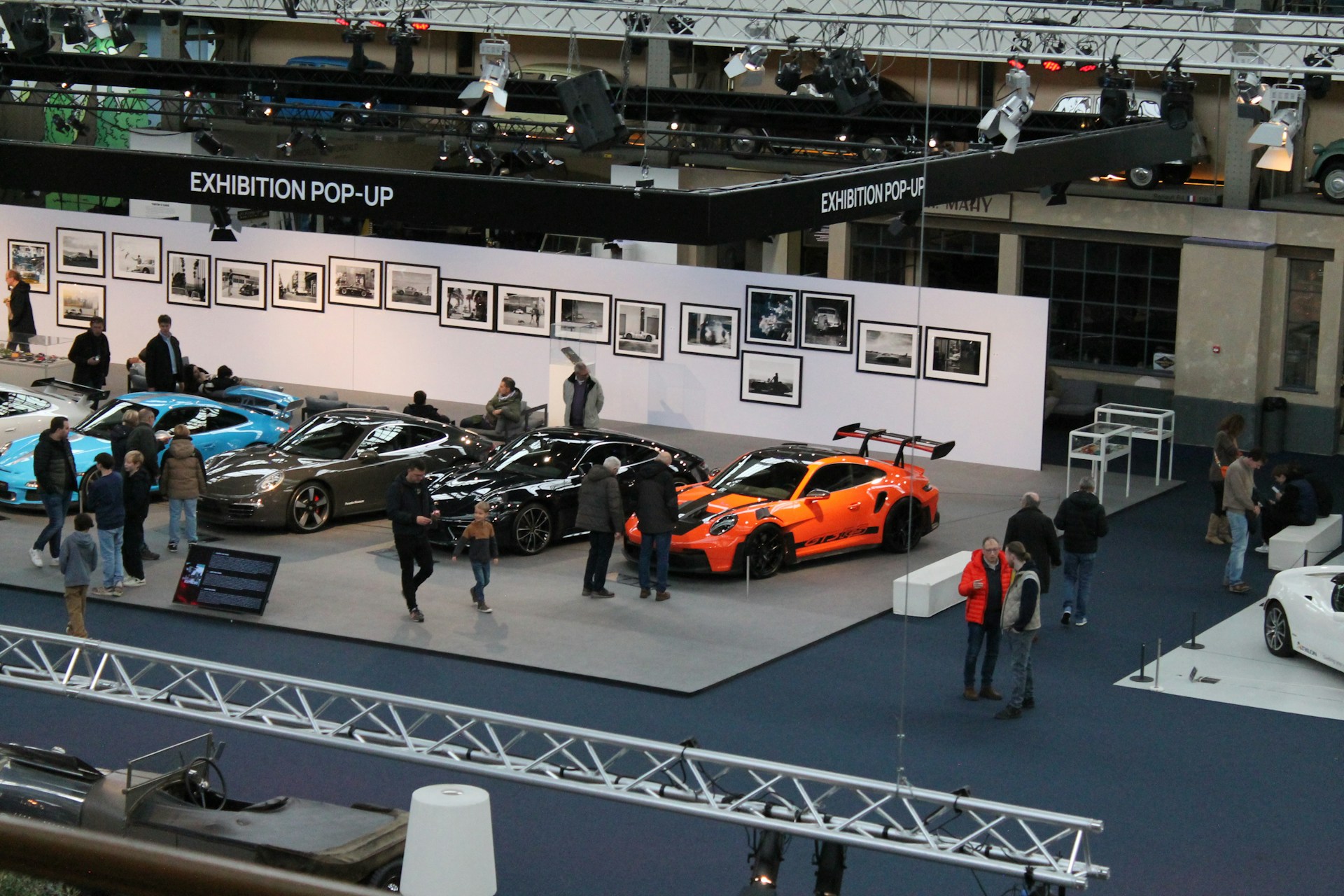
Trade show graphics that can adapt to any booth layout save time, stress, and a lot of hassle. When your visuals work in a 10×10 inline space, a 10×20 corner, and a larger island booth, your team can focus on meeting people instead of wrestling with panels and last-minute reprints.
Summer through early fall is peak show season. Many exhibitors are bouncing from one event to another, each with a new floor plan. Some deal with last-minute changes from show organizers, awkward gaps in the back wall, and branding that feels different at every stop. In this article, we will walk through how to plan flexible trade show graphics that look intentional in almost any layout and stay true to your brand from show to show.
Design Graphics That Flex with Every Floorplan
During the busy summer show run, it is common to go from a small inline booth at one event to a corner or peninsula at the next. If your graphics are built only for one layout, every change means stress, rush shipping, and sometimes, graphics that just do not fit.
Typical pain points include:
- A beautiful 10×10 mural that does not work in a 10×20 space
- Graphics that get blocked by columns, neighbors, or monitors
- Different looks at each show that confuse returning visitors
The good news is that one adaptable trade show graphics package can follow you anywhere. When you design with flexibility in mind, the same core pieces can shift from back wall to side wall, from island to inline, and still feel planned and polished.
At First Trade Show, we work with exhibitors on modular exhibits and graphics that can reconfigure for different events. Our team helps plan layouts, build the right mix of pieces, and support you through setup so your booth feels consistent even as your space changes.
Start with a Flexible Booth Strategy, Not Just Art
Strong graphics start with a smart booth strategy. Before you think about colors and photos, think about the spaces you are likely to book.
Different booth types affect how people see your graphics:
- Inline: One main back wall, neighbors on both sides
- Corner: Two open sides, more angles to grab attention
- Peninsula: Three open sides, people can approach from multiple directions
- Island: Open all around, plenty of options but also more decisions
Next, plan your viewing zones:
- Long-range: High elements like hanging signs or tall towers that people notice from across the aisle
- Mid-range: Back walls and side walls where your main message and product visuals live
- Close-range: Counters, tablet stands, and floor graphics with details and calls to action
Think of your trade show graphics as a graphic ecosystem. Instead of one large fixed mural, you have a set of modular tiles that can move around. It helps to map out at least two or three likely layouts for the next year or so and design panel sizes and messages that work for all of them.
Summer is a great time to revisit this strategy. Mid-year, you can review what worked in spring, adjust for fall, and update graphics without rush decisions or last-minute shipping panic.
Design Modular Trade Show Graphics That Reconfigure
To keep your booth flexible, it is better to think in panels instead of single giant walls. Using repeatable panel widths, like 24 or 36 inches, lets you link panels into 10-foot or 20-foot backdrops, or split them into L-shapes and kiosks.
A modular panel set can:
- Form a full back wall at one show
- Break into side walls and towers at the next
- Wrap around counters or support a demo area at another
Your visual hierarchy should still work when panels move. Put your:
- Logo
- Core value statement
- Main product or hero image
into central hero panels that always sit in the most visible spot. Supporting panels can carry patterns, product families, or lifestyle shots that can be moved or left out without breaking the look.
Use brand colors and clean backgrounds so panels align visually in any new combo. Avoid graphics that depend on one layout, like arrows pointing at a single demo screen or text that only makes sense if panels sit in one order.
Portable and modular booths from First Trade Show are built around interchangeable graphic sets. We help plan which panels are must-use in every layout and which ones are flexible add-ons for larger spaces.
Mix Hardware and Graphics Built to Travel and Adapt
Hardware choice can either lock you into one layout or free you up to change on the fly. The goal is pieces that can stand alone or work as part of something bigger.
Look for versatile structures like:
- Portable back walls that accept multiple panel layouts
- Banner stands that can line up as a wall or stand apart as accents
- Fabric frames that can grow from 10 feet to 20 feet with extra sections
For example, a set of vertical banner stands can act as a full back wall at a smaller show. At the next event, the same stands can flank a counter, sit beside a monitor, or guide traffic into an island space.
Specialty elements can still adapt if you plan them right:
- Hanging signs: Double-sided or four-sided graphics with simple, bold messages that work over any footprint
- Counters and kiosks: Branded wraps with evergreen content like taglines, URLs, or QR codes
- Accessories: Table throws, tablet stands, and small product pedestals that repeat the same visual story
Since summer and early fall often mean tight travel schedules, durability matters. Look for hardware systems that allow tool-free graphic swaps, so you can change panels between shows without drama. High-quality printing and finishing will hold up better to heat, shipping, and quick turnarounds.
First Trade Show offers modular booths, banner stands, counters, and hanging signs that share compatible graphic systems, so one set of trade show graphics can move between them without starting from scratch.
Keep Brand Consistency Across Every Configuration
When your layout keeps changing, brand consistency is what ties everything together. A few non-negotiable rules can keep your booth feeling like the same brand every time.
Key standards to lock down:
- Logo usage and clear space
- Approved brand colors
- Font choices and minimum sizes
- Rules for how graphics appear on walls, banner stands, counters, and screens
Build a simple messaging hierarchy and reuse it across your modular graphics:
- One main headline that explains what you do
- One to three core benefits
- A short proof point or social proof
- A clear call to action
Repeating the same message on your back wall, counters, handouts, and digital screens helps visitors remember who you are and what you offer.
You can still make seasonal tweaks without a full redesign. For summer into fall, try:
- Small magnetic add-on panels
- Interchangeable fabric sleeves
- Updated QR codes that point to seasonal promos
This approach keeps your core visuals in play longer, supports sustainability, and reduces the need to reprint everything for every show.
For digital content like demos or videos, match the same colors, fonts, and tone you use in your physical graphics so the booth feels like one unified experience.
Turn Your Next Booth Into a Reusable Visual System
When you pull all of this together, your booth becomes more than a one-time display. It turns into a reusable visual system that works across any booth size you book over the next several seasons.
The payoff is clear: lower long-term effort, faster prep, less panic when the floor plan shifts, and a more professional presence at every event on your calendar.
Helpful steps before your next show:
- Audit your current booth and flag graphics that only work in one layout
- Map upcoming events, booth sizes, and locations
- Prioritize updates to hero back wall panels, banner stands, and counters first
At First Trade Show, we partner with exhibitors to plan, design, and supply modular exhibits and trade show graphics that flex with real-world show schedules and changing floor plans. Our goal is simple: help you walk onto any show floor, in any booth size, and know your graphics are ready to work.
Get Started With Your Project Today
Transform your booth into a crowd magnet with professionally designed trade show graphics tailored to your goals. At First Trade Show, we work closely with you to create visuals that fit your brand, budget, and event schedule. Share your ideas, timelines, and requirements, and we will guide you through every step. If you are ready to move forward or have questions, simply contact us to start your project.